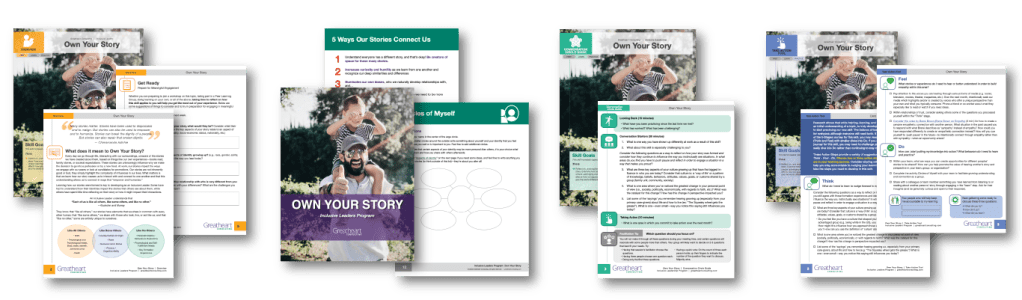
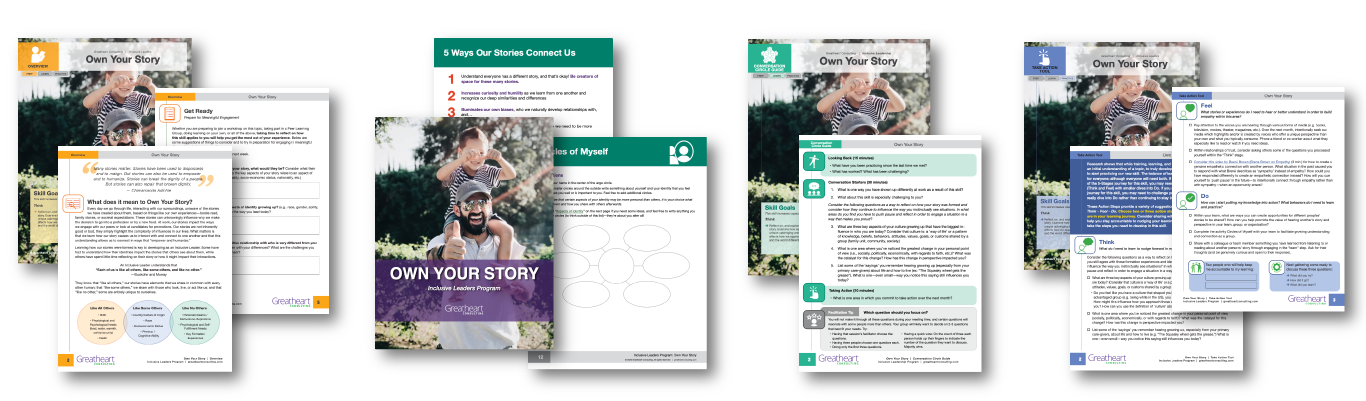
Case Study: Creating a Learning Journey
Crafting a set of resources to support the learning journey for each of seven inclusive leadership skills.
Project Overview: Greatheart Consulting is a leading specialist in Inclusive Leadership Consulting. As the Director of Learning, Research, Analytics, and Development I embarked on a mission to enhance their offerings by developing a standardized set of resources for seven key inclusive leadership skills. The primary objective was to provide participants with comprehensive support for both learning and practical application.
The Challenge: There was a need to streamline the consulting services by creating consistent and adaptable resources and tools. These standardized materials would not only optimize the efficiency of our consultants but also ensure a consistently excellent experience for our clients.
The Solution: This project involved the creation of a standardized set of materials tailored to each of the seven skills including pre-workshop engagement (the Overview), dynamic workshop content for both the facilitators and the participants (Workshop Workbook and PowerPoint deck), and post-workshop tools for application, discussion, and practice (the Take Action Tool and Conversation Circle Guide).
Key Achievements:
- Standardization: By developing uniform resources, I enabled our consultants to apply the same content across various clients, saving valuable time and ensuring a consistent and high-quality client experience.
- Comprehensive Support: Participants engaging with the ‘Own Your Story’ skill were provided with a holistic learning journey that extended beyond the workshop itself, fostering long-term skill development and application. Facilitators were provided with extensive speaker notes, activity and engagement suggestions, and directions for any client customization needed within the PowerPoint.
- Scalability: The success of this project paved the way for the client to replicate this approach for the remaining six inclusive leadership skills, further strengthening their consulting services.
Company
Greatheart Consulting
Position
Director of Learning, Research, Analytics, and Development
My Roles
Product Manager, Project Manager, Instructional Designer, Page Layout and Graphic Designer, Content Creator
Technology Used
Adobe InDesign, Adobe Illustrator, Adobe Acrobat, PowerPoint, Excel
The Learning Philosophy
Learning should not be confined to a short, 2-hour workshop. That’s why I purposefully designed this learning journey to ‘wrap-around’ and extend to both before and after the workshop through pre-workshop preparation and post-workshop application, discussion, and practice.
Each workshop was thoughtfully structured with key tenets of adult learning theory in mind including an ability for participants to learn at their own pace, ensuring that the learning has real-world applications, and recognizing that adults bring real-life experiences to the table. Therefore the learning in general and the workshops in particular combine instructional segments, foster personal connections through activities, and promote learning and accountability through peer group discussions.
This comprehensive, multifaceted approach caters to various learning styles and encourages participants to interact with the material over an extended period. Which, in turn, facilitates genuine transfer of training.
The Creation Process
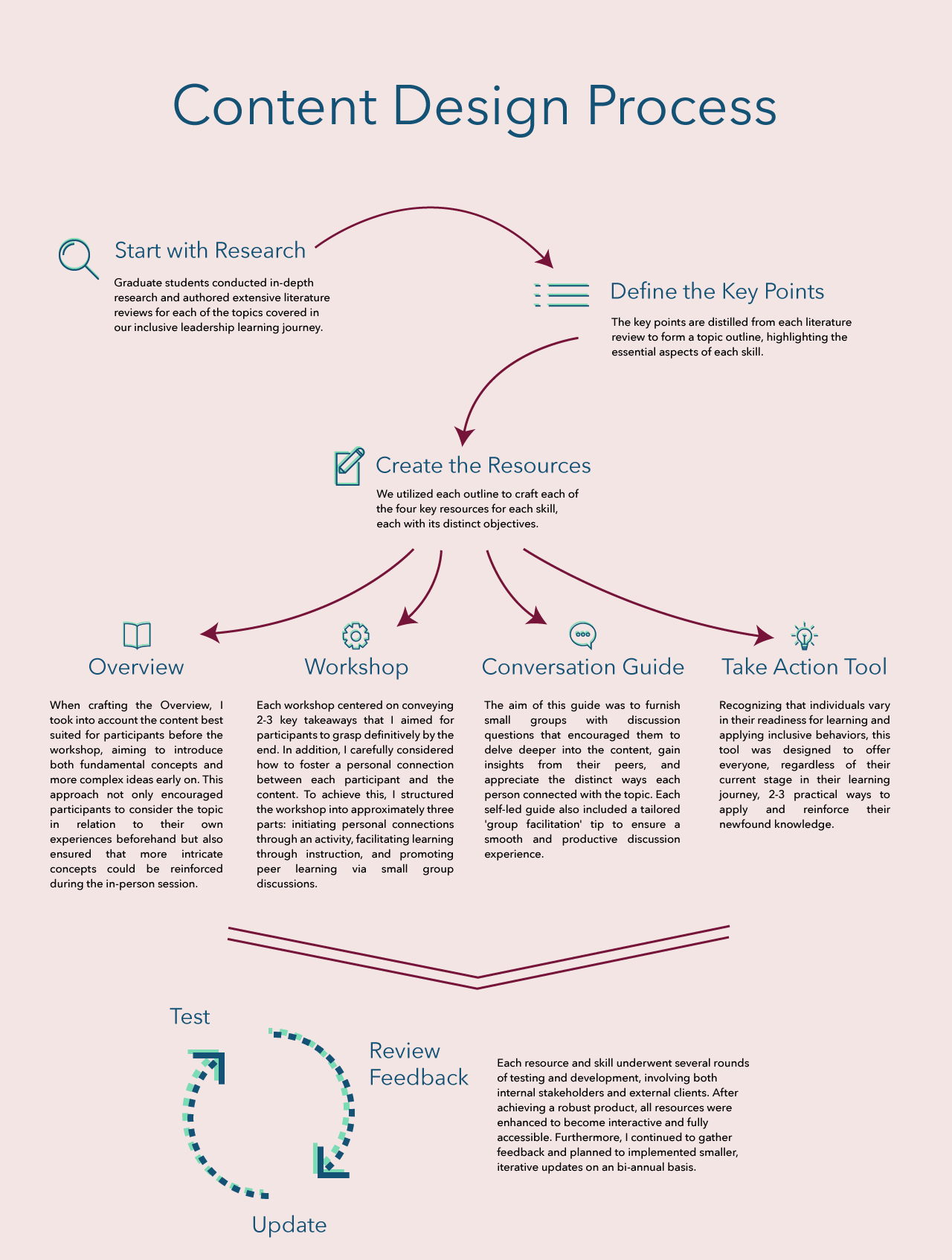
With my foundation in Industrial-Organizational Psychology, I’ve held onto a crucial principle: always kickstart with research. This principle has been my compass throughout my journey in learning and product development. I blended it with the principles of Design Thinking and Human-Centered Design to forge an iterative path which involved crafting, testing, revising, testing some more, and meticulously fine-tuning the content.
Only after this rigorous process did I bring it all together, finalizing the participant documents and ensuring that every PDF became interactive and fully accessible. Facilitator resources were standardized with the ability to customize aspects of the workshop toward specific client needs.
Participant Documents Included in Learning Journey
Overview
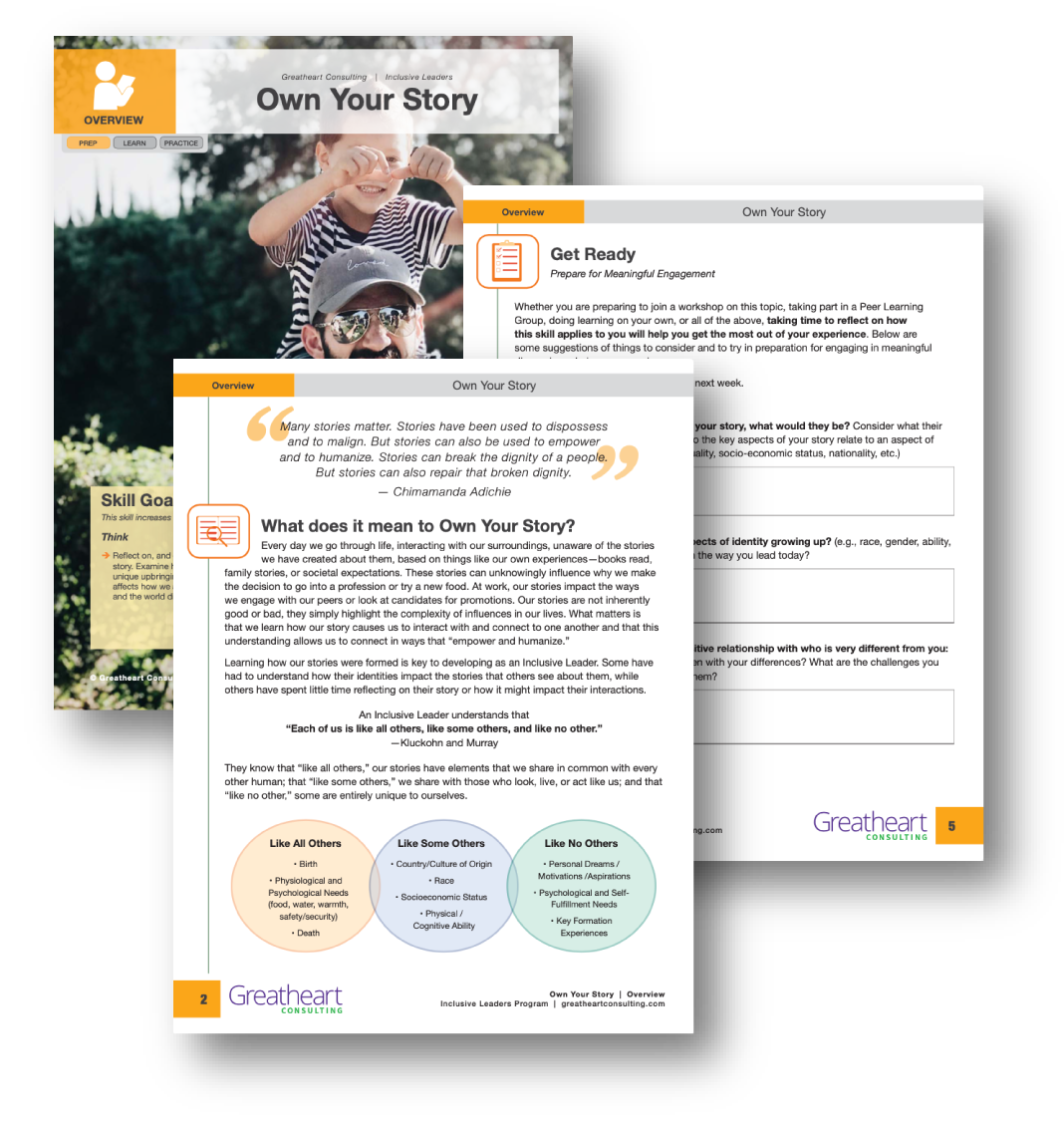
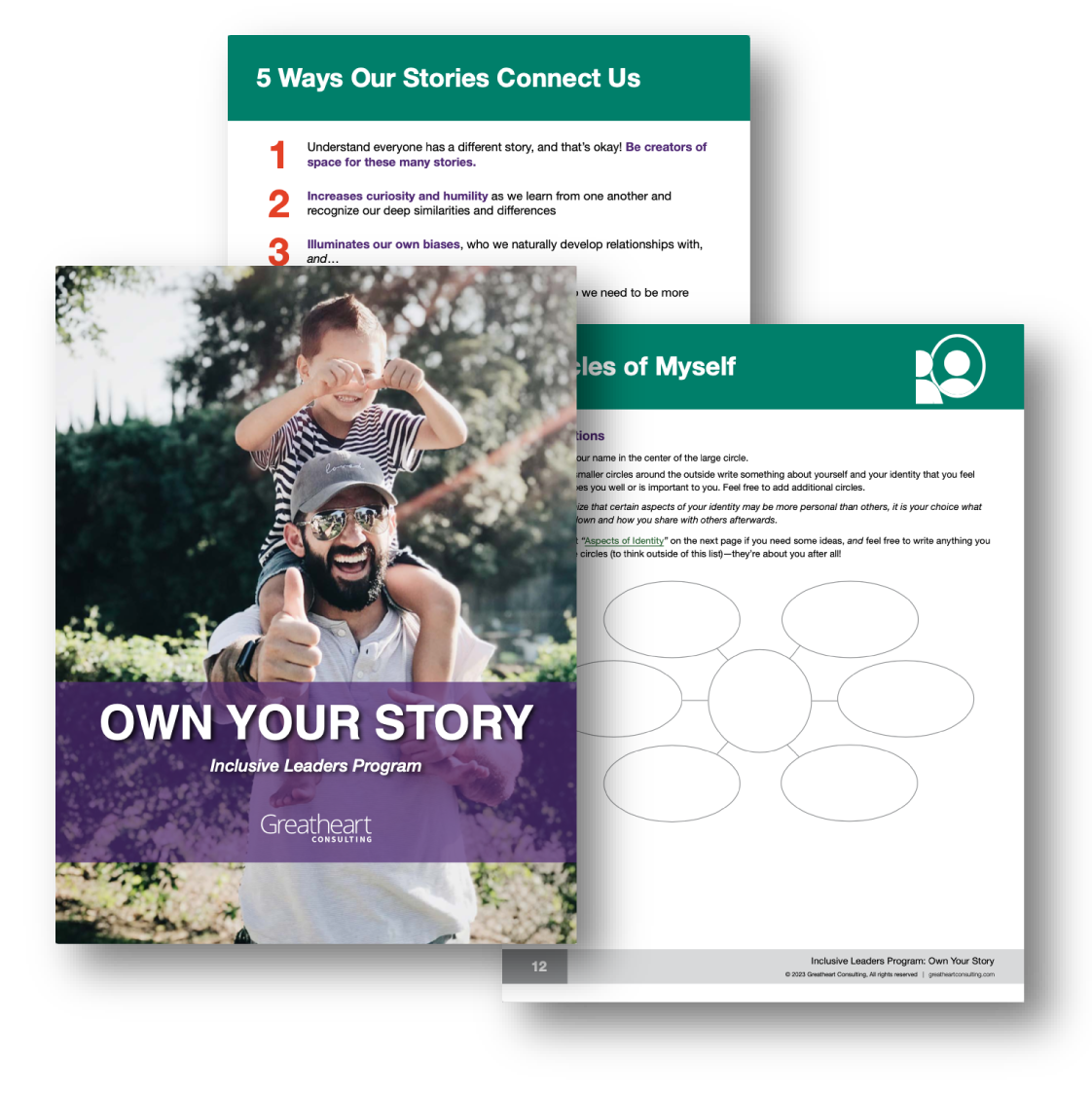
The Overview is the first way in which participants interact with the workshop’s content. It incorporates an initial introduction to key skill concepts and thought-provoking reflection questions, effectively preparing participants for active engagement with the subject matter prior to the workshop’s commencement.
For best transfer of training, it is ideal to have learners engage with a topic over a period of time, rather than only in one 2-hour block. Additionally, many learners benefit from having access to the content before they are expected to participate with it through discussion groups and activities. The Overview was developed to meet all of these needs.
Workshop Workbook
The Workshop Workbook is an extensive and interactive workbook which encompasses all workshop content, features interactive sections for activities and exercises, and serves as a valuable future reference for participants.
I partnered with an accessible design specialist to ensure that the entire interactive PDF was also fully accessible and readable by a screen reader, and that the activities were structures in such a way that was actually usable by those who needed to use a screen reader.
For instance in the activity, “Circles of Myself”, pictured to the right, we structured the tab order so that it started in the center circle, where the participant enters their name, and continued on to the outside circles, where the participant enters one aspect of their identity in each space. While an accessibility checker will ensure that elements are labeled, it does not go as far as to ensure that the tab order of an activity like this is in an order that makes sense for the learner. In completing this each skill’s learning journey, the activity portion especially gave me a new lesson in accessible design.
Take Action Tool
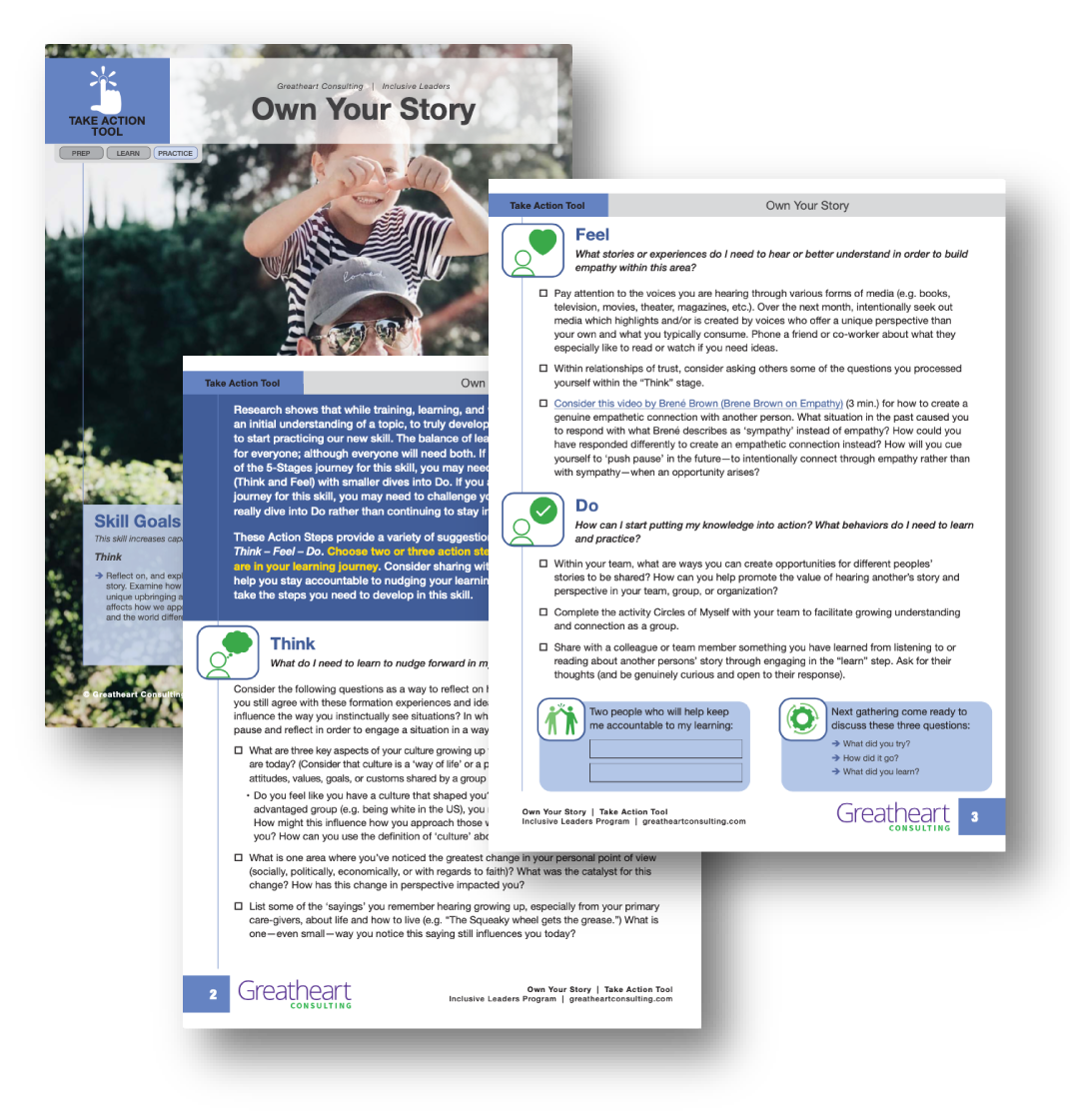
After completing the workshop we often had participants asking “Now, what do we do?!” The Take Action Tool was developed to offer concrete and actionable recommendations for participants to proactively apply their learning after the workshop. Suggestions are broken into 3 categories of learning: Think: Additional resources for personal learning and reflection. Feel: Ways to build empathy and connect with others’ experiences. Do: Actions to take to put learning into practice.
Since our workshops were often run with groups of people who were each at very different places in their inclusion journey, the tool aimed to provided ways to practice the content for both those just starting to think about inclusion as well as those who were active advocates within their organizations.
Conversation Guide
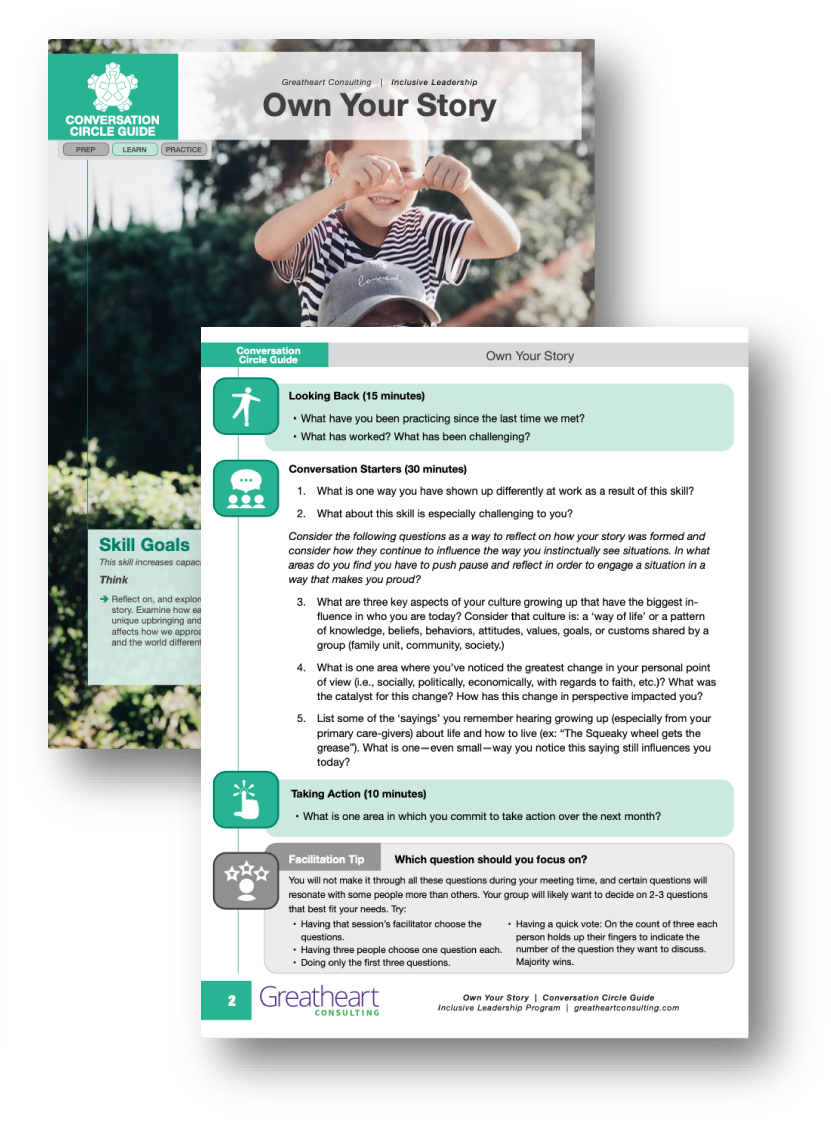
The Conversation Circle Guide is a self-guided framework for small group discussions between workshops. A key tenant of the learning philosophy is that participants have a lot to learn from each other, and through small-group discussion. This guide helps to extend the learning experience and conversation outside of the workshop and reinforces lasting behavioral changes.
Since these conversation circles were going to be self-led groups, I included a ‘Facilitator Tip’ with each guide which addressed topics such as: how to rotate leadership, knowing which questions to focus on if the group runs short on time, integrating ‘conversation cues’ or non-verbals which help to show support while minimizing interruptions, and reminding participants to stay flexible with where the conversation leads, and using the time in a way that is most beneficial to them.
Facilitator & Producer Documents Included in Learning Journey
PowerPoint + Speaker Notes
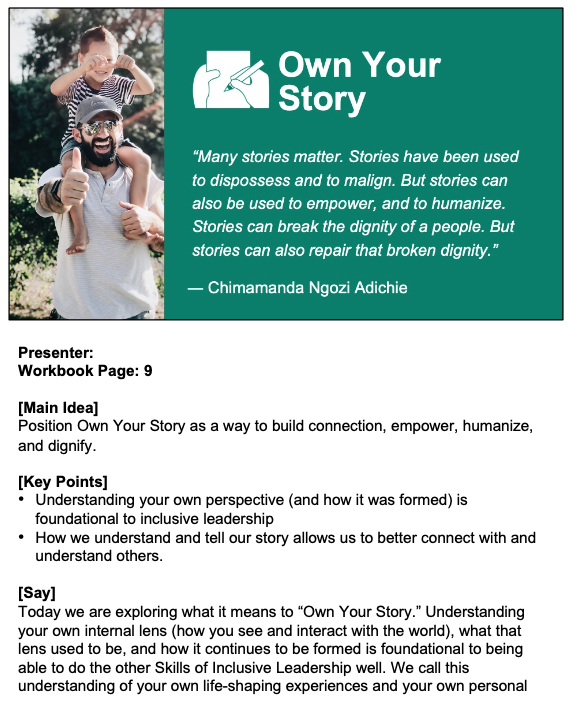
Facilitators receive a complete PowerPoint (PPT) presentation with all the essential slides for delivering a dynamic session. Each slide is accompanied by extensive speaker notes which offer facilitators detailed guidance, including extra resources for deeper insights, optional discussion prompts or activities, and references to corresponding workbook pages for participants.
Facilitators who are new to the material can begin with the scripted “Say” portion of the speaker notes and progressively transition to using primarily the “Main Idea” and “Key Points” bullets as they become more comfortable delivering the workshop in their own words. “Story Starters” story prompts support facilitators in developing stories which connect key concepts within the workshop to their own experience and learning journey.
Production Sheet
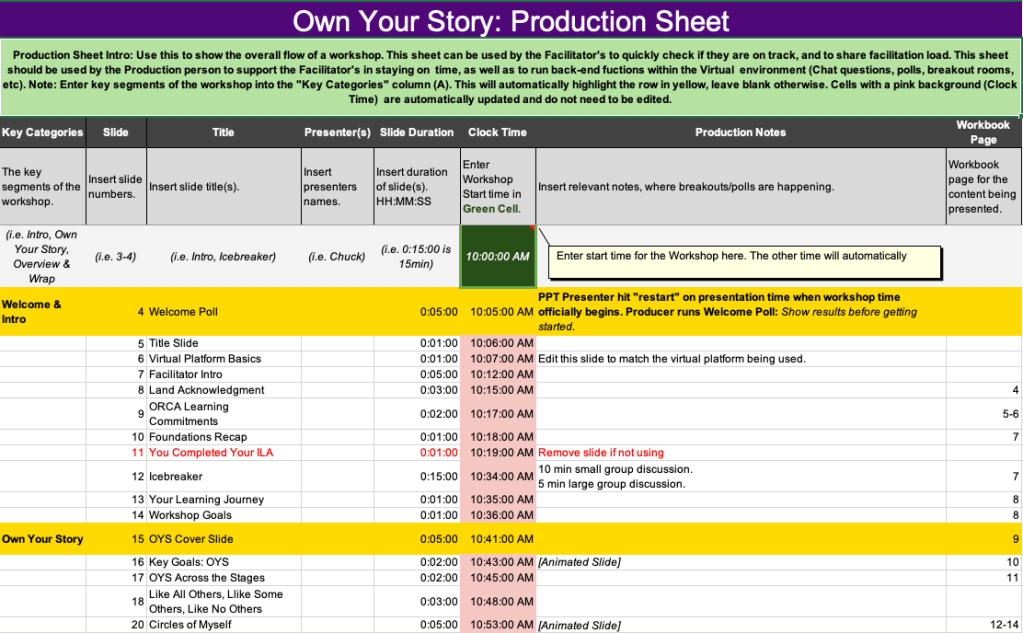
The Production Sheet is a valuable resource for the person responsible for running the workshop, especially in virtual settings. This Excel document includes slide timings, facilitator assignments, and directions for small group discussions, whole group discussions, or polls during the presentation. It serves as a guide to keep the session on track and ensure smooth facilitation.
The Results
The work of standardizing materials for our 7 inclusive leadership skills yielded the following results:
- Time Savings: This initiative generated significant time savings for everyone involved, from project managers and learning designers to consultants.
- Consistent Excellence: Standardization ensured consistent excellence in less time. With fewer customizations needed for each client, we could guarantee error-free content with branding applied, enhancing the overall quality and efficiency of our offerings.
- Micro-Improvements Focus: Freed from the task of piecing together workshops from scratch for each client, we redirected our efforts toward making continuous micro-improvements. This allowed us to maintain the most up-to-date content and iteratively enhance each workshop based on client and participant feedback, resulting in an ever-improving experience.
- Full Accessibility: By eliminating the need to tailor the Workshop Workbook for every new client, we were able to invest in making our content fully accessible. Working closely with an Accessibility specialist, we ensured that all content, including interactive activities, could be seamlessly used with screen readers, enhancing accessibility for all.
✓
28
Total Resources created across the seven skills.
✓
3,000
Content has been delivered to over 3,000 executives, people managers, and individual contributors, and counting!
✓
20+
This inclusive learning journey has been run at 20+ Fortune 100, SMB, and non-profit organizations.
 Janai Wallace